Zinc plated bolt nut sets are widely used in construction, infrastructure, and marine projects ,often in harsh environments and their corrosion resistance is a key factor in ensuring their long-term stable performance. How to check the bolt nut sets' surface is good enough to protect the material before used it? Salt spray testing, as a standardized evaluation method, simulate harsh corrosion environments to verify the protective effect of the galvanized layer in short time. This article will tell you the purpose, principle, standard, steps and influencing factors of the salt spray test in detail, and introduce this important testing process.
The core purpose of the salt spray test is to evaluate the corrosion resistance of zinc plated bolt nut by accelerating the corrosion process to ensure that they can maintain excellent p
erformance for long time using. The details is below:
a .Evaluate corrosion resistance: to confirm how many hours the zinc plated bolt nuts will become rusty in spcial salt spray environment
b.Quality control: Using salt spay test to check that this bitch of bolt nut's production process of zinc plated meets the requirements
c.Comparative performance: With the same thickness zinc palted layer , to Juding the hours become the rusty , to provide a basis for comparing the corrosion resistance of galvanized bolts nuts from different manufacturers or batches
All bolts and nuts manufactured in our factory-ZJB Fastener with various surface finishes are subject to strict salt spray testing before being released from the factory. Only products that fully meet the required testing standards are allowed to be delivered to customers.
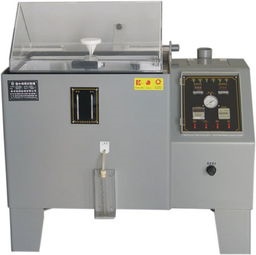
Test principle involves creating a highly corrosive environment inside a closed chamber using an atomized 5% sodium chloride atomized 5% sodium chloride (NaCl)solution (salt fog)at a constant temperature (usually 35°).
a.Environmental simulation: The bolts nuts samples are placed in a salt spray chamber, and a 5% sodium chloride solution is sprayed in the chamber. A high salt spray environment is formed by continuous spraying to simulate the salt spray environment of the ocean.
The Salt Spary Test Machine
b.Sacrificial anode mechanism: The zinc layer acts as a sacrificial anode, corrodes first, and delays the corrosion of the steel. During the test, the formation time and area of the white rust (corrosion product of zinc) of the zinc layer and the red rust (corrosion product of iron) of the substrate are observed.
White Rust Red Rust

a .ASTM B117 (American standard): commonly used in neutral salt spray tests (NSS), and is one of the most widely used standards.
b.ISO 9227 (International standard): covers multiple types such as neutral salt spray (NSS), acetic acid salt spray (ASS), and copper accelerated salt spray (CASS).
Salt spray test usually includes the following steps:
a. Sample preparation: the sample of bolts and nuts’s surface need to be cleaned and remove contaminants to ensure the accuracy of the test results.
b. Chamber Setup: Set the salt spray chamber to (for neutral salt spray). Prepare a 5% sodium chloride solution with a pH of 6.5 to 7.2.
c. Exposure test: samples are placed in the chamber, typically at an angle of 15–30 degrees from the vertical to allow proper runoff and prevent droplets from falling on other samples spray it continuously. The test time is usually 24 hours,48hours, 72 hours up to 1000 hours.
d. Result evaluation: By checking the corrosion on the bolts and nuts surface, record the time and area of white rust and red rust, and determine whether it is qualified according to the standard.
e. Result judgment
Typical Salt Spray Test Hours for Bolt Coatings
· Black Oxide: 24–96 hours
· Electro-galvanized Zinc: 72–144 hours
· Zinc Yellow Chromate: 96–144 hours
· Cadmium: 36–240 hours
· Mechanical Galvanizing: 100–200+ hours
· Dacromet/Geomet: 480–1,000+ hours
· Stainless Steel (304/316): >1,000 hours
· Teflon/Specialized Coatings: 1,000–3,000 hours
Failure sign: When the area of red rust or white rust exceeds the standard limit during the test, it means that the samples fails to meet the corrosion resistance requirements and needs to re-evaluate the process or select a more suitable product.
The results of the salt spray test may be affected by many factors:
· Test Temperature & Humidity:Higher temperatures significantly accelerate corrosion rates. A rise can increase the corrosion rate by 2–3 times. Relative humidity over 70% is required to create a conductive, corrosive electrolyte.
· Salt Solution Concentration: A 5% solution is standard. For most metals, corrosion increases as concentration decreases below 5% (due to higher oxygen saturation), but for zinc/cadmium, it increases with higher concentration.
· PH Value of Solution: For neutral salt spray (NSS), the pH should be 6.5–7.2. Lower pH increases acidity and accelerates corrosion.
· Sample Placement Angle: Samples should be angled at 15°–30° from vertical, rather than horizontal, to prevent excessive, unrealistic accumulation.
· Settling Amount & Spray Method: The rate of spray fallout (typically 1–2 mL/h) and fine particle size (which increases oxygen absorption) directly affect the amount of corrosion.
· Testing Duration: Longer exposure times allow for greater breakdown of coatings, often measured in intervals (e.g., 24, 48, 96+ hours)
Salt spray testing is widely used in the following industries:
(1) Construction industry: Bolts used for building structures, facilities, etc. that need to be exposed to harsh environments for a long time.
(2) Automobile industry: Bolts exposed to humid and salt spray environments, especially for automobile chassis, engines and other parts.
(3) Bridges and marine engineering: Bolts that are exposed to the marine environment for a long time need to have high corrosion resistance.
Through salt spray testing, manufacturers can optimize the galvanizing process, and users can choose suitable products based on the test results to ensure long-term safety.
Although salt spray testing can provide a simulation of accelerated corrosion, it still has certain limitations:
(1) Accelerated and natural corrosion: Salt spray testing in the laboratory accelerates the corrosion process, but may not fully simulate the corrosion conditions in the real environment.
(2) Single factor: Salt spray testing only simulates salt spray corrosion, while the actual environment may have complex factors such as humidity and temperature fluctuations, which have a more complex impact on corrosion performance.
Summary
Salt spray testing provides a scientific evaluation method for the corrosion resistance of galvanized bolts, helping manufacturers to verify and optimize the galvanizing process, while providing users with a reliable corrosion resistance reference. By understanding and applying salt spray testing, the industry can more accurately meet the needs of corrosion resistance in material selection and design.


